Benefits
A sport for the body, mind, and movement.
Growing Confident Minds
Training at Kiroi encourages focus, discipline, and goal setting in a way that naturally builds confidence. Through performances and achievements, gymnasts learn to express themselves creatively through music and movement.
Friendship & Life Skills
Gymnastics is as much about people as it is about sport. At Kiroi, young athletes learn to support their teammates, embrace challenges with resilience, and carry sportsmanship and respect for others into everything they do.
Healthy & Active Bodies
Rhythmic gymnastics is a full-body workout that builds strength, flexibility, and posture while developing balance, agility, and coordination — giving young athletes a strong, capable foundation for lifelong fitness and stamina.

The art of the apparatus.

In rhythmic gymnastics, athletes train and compete across six disciplines, each demanding a distinct blend of technical skill and creative expression.
Rope
The rope is traditionally made of hemp or synthetic materials, with length tailored to the gymnast’s height. It’s used for skipping, jumps, swings, figure-eights, and more. Historically one of the original FIG recognised apparatuses alongside hoop and ball it has since been phased out of senior individual events but still appears in junior group routines.
Ball
Made of rubber or synthetic material, the ball is smooth, 18–20 cm in diameter, and must weigh at least 400g.Routines showcase rolling the ball across the body, bouncing, throwing, catching, and balancing all while maintaining fluid, continuous movement. The ball highlights grace, body control, and seamless integration with dance elements.
Clubs
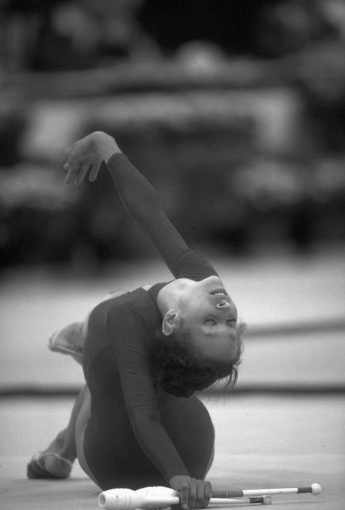
A pair of small, tapered batons (each 40–50 cm long, weighing at least 150g), usually made of wood or synthetic material. Club routines feature intricate mills, swings, tapping, asymmetric movements, throws, and catches. They demand high precision, ambidexterity, and rhythm.
Hoop
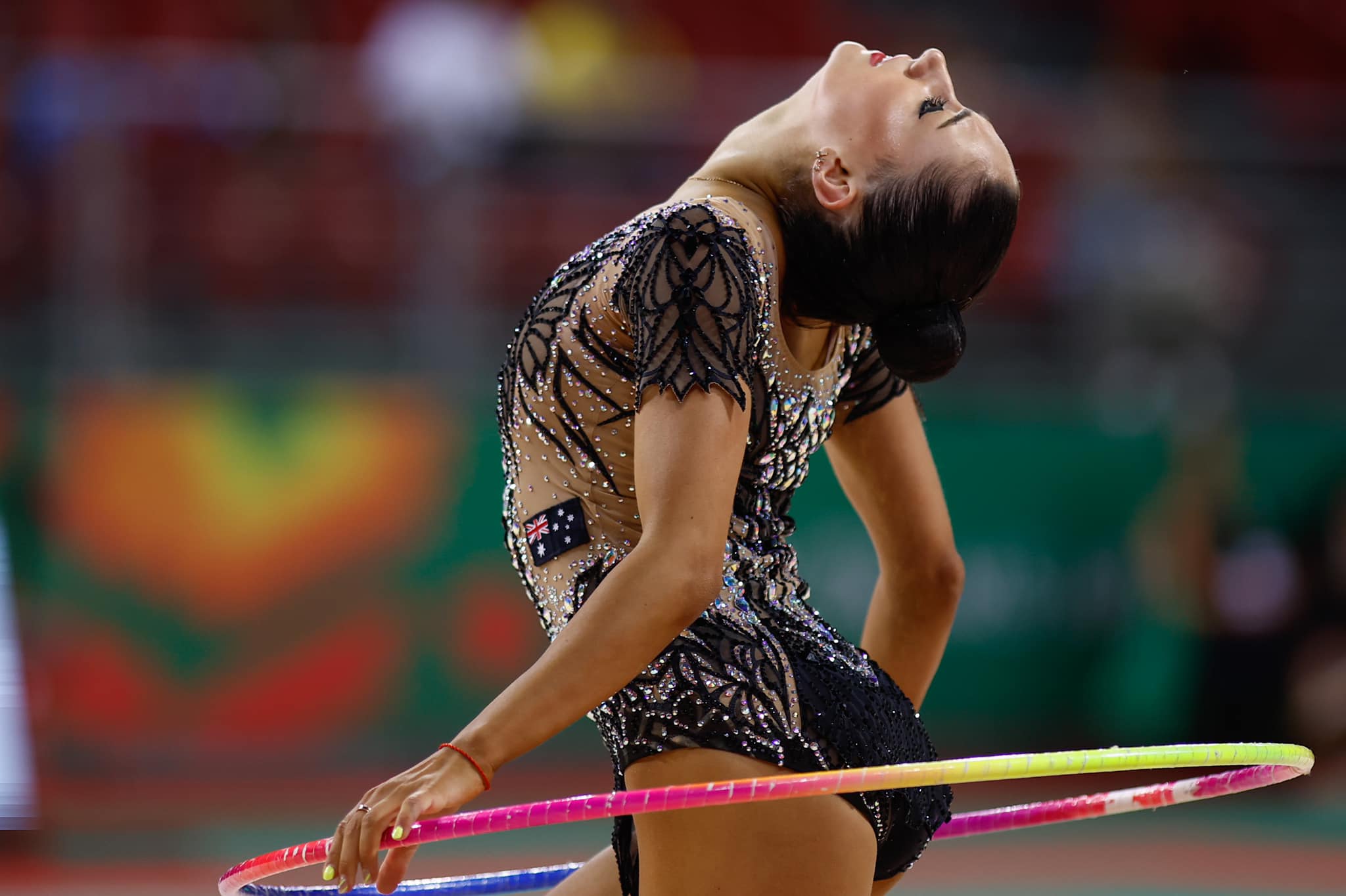
Made of plastic or wood, with an inner diameter of 80–90 cm and a minimum weight of 300g. Hoop routines include rolls, rotations around the hand or body, passing through, swings, throws, and catches. The hoop’s circular shape encourages large, sweeping movements and dramatic floor patterns.
Ribbon
A 6 m (senior) or 5 m (junior) satin ribbon attached to a stick (50–60 cm). Routines feature spirals, snakes, swings, throws, and big figure-eight movements. The ribbon creates continuous, flowing patterns and requires constant motion to avoid tangling. It highlights artistry, musicality, and expression.
Freehand
Also known as floor exercise (FX) in rhythmic gymnastics, this involves pure body movement without apparatus. Routines rely on leaps, balances, pivots, and dance steps to interpret the music. Freehand highlights the gymnast’s artistry, expression, and technical fundamentals, and is mainly used in younger age categories and beginner competitions.

A short history of rhythmic gymnastics.

Rhythmic Gymnastics combines dance, ballet, and acrobatics with the skilful handling of apparatus such as rope, hoop, ball, clubs, and ribbon. Performed to music, it celebrates grace, strength, and artistry.

The sport began in early 20th-century Europe, inspired by ballet and free movement exercises. By the 1930s, apparatus were introduced, adding new creative and technical dimensions.

Rhythmic Gymnastics was officially recognised by the International Gymnastics Federation (FIG) in 1961, with the first World Championships held in 1963. It made its Olympic debut at the 1984 Los Angeles Games for individuals, and in 1996, the group competition was added. ​Today, rhythmic gymnastics is practiced worldwide, with athletes pushing the boundaries of flexibility, coordination, and performance.

In Australia, the sport continues to grow, with gymnasts achieving success at Commonwealth Games, World Championships, and the Olympics from our very own Alexandra Kiroi-Bogatyreva, inspiring the next generation to perform with elegance and passion.
Book a class
Google reviews
Hear from our parents & community.
Frequently asked questions.
Everything you need to know before your little one takes their first steps onto the floor.
How do I enrol my child at Kiroi Academy?
Getting started is simple. Head to our enrolment page, choose the class that suits your child's age and experience, and book your spot online. Not sure which class is the right fit? Get in touch — we're happy to help you find the best starting point for your child.
What should my child wear to class?
We recommend comfortable, form-fitting activewear such as leggings and a fitted t-shirt or a gymnastics leotard. Avoid anything too loose that might get in the way during movement. Hair should be tied back securely, and jewellery removed before class. Bare feet are preferred on the gym floor, so no shoes or socks are needed once they're on the mat.
When are classes held, and how long do they run?
We offer classes throughout the week, including weekend options, to fit around family schedules. Most sessions run between 45 minutes and an hour depending on the age group. Take a look at our timetable online to find a time that works for you, or reach out if you need a hand.
How much do classes cost?
We offer flexible pricing including casual, term, and multi-class options, with fees varying by program and age group. Visit our pricing page for a full breakdown, or contact us directly and we'll help you find the right option for your family.